Tips for wellness from our Mental Health In Schools Team
Listening
“He understands badly who listens badly.” Welsh proverb
Listening is an important skill that helps us to feel connected to others and the world around us. When we listen, we can learn new things, solve problems and interact with people around us. This is great for our mental health as we are using our minds and connecting with people.
Try out these games to test your listening skills:
1 – Sound hunt! Close your eyes and listen carefully to the sounds around you. See how many sounds you can identify in a minute. This type of listening activity helps us to connect with the world around us, which can help us to feel calm.
2 – Weekend catch up In pairs, partners should take it in turns to talk for 1 minute about their weekend. The children should then ask each other questions about their weekend, to see if the listener could remember what they did. Each partner can score points for each question they answered correctly.
3 – I went to the supermarket, and I bought a… As a group, sit in a circle. The first person says, “I went to the supermarket, and I bought a…” and they choose an item, for example an apple. The next person has to repeat that sentence and choose their own item to add. For example, “I went to the supermarket, and I bought an apple and a book”. Keep going around the circle adding items. If someone forgets an item, you move onto the next player. It gets harder as you go!
These last two games encourage ‘active listening’, where you are taking in the information you are hearing. This is a useful skill to practice. You can also practice this at home, trying to remember what you have heard on a programme or video!
Please contact [email protected] for information and advice about mental health and well-being for your child and your family.
Tips for wellness from our Mental Health In Schools Team
Caring
Caring is about looking after the needs of yourself and others. There are lots of ways you can show others that you care, showing kindness, compassion, love, support and being thoughtful.
It is equally important to take time to care for ourselves, sometimes termed ‘self-care’. This can help us to increase our resilience and sense of self-worth. Allowing yourself time to engage in activities you enjoy and make you feel good, along with recognising unkind thoughts and trying to replace these with kinder thoughts can be part of caring for yourself.
Caring for others can help us feel connected, purposeful, and close to those we care for. These things are positive for our mental wellbeing. Can you think of a way you’ve shown care for someone this week?
Everyday millions of people in the UK give additional care to people they know through helping with everyday living tasks. Young Carers may also be responsible for looking after younger brothers and sisters and doing household chores. If you are, or you support a Young Carer, you can find local carers support by following these links:
Caring Chain – write down an act of caring they can do for another person or for themselves on a strip of paper. Create a paper chain with each of these strips, by folding and linking them together. This can then be displayed and children can be encouraged to give a new act of caring a go each week.
Try to identify 3 ways you have been caring towards yourself and 3 ways you have been caring towards others. Then, set a goal for another caring act you can carry out over the following week.
As this week has been Mental Health Week, I have chosen some fabulous books that help us understand what emotions we are feeling and why.
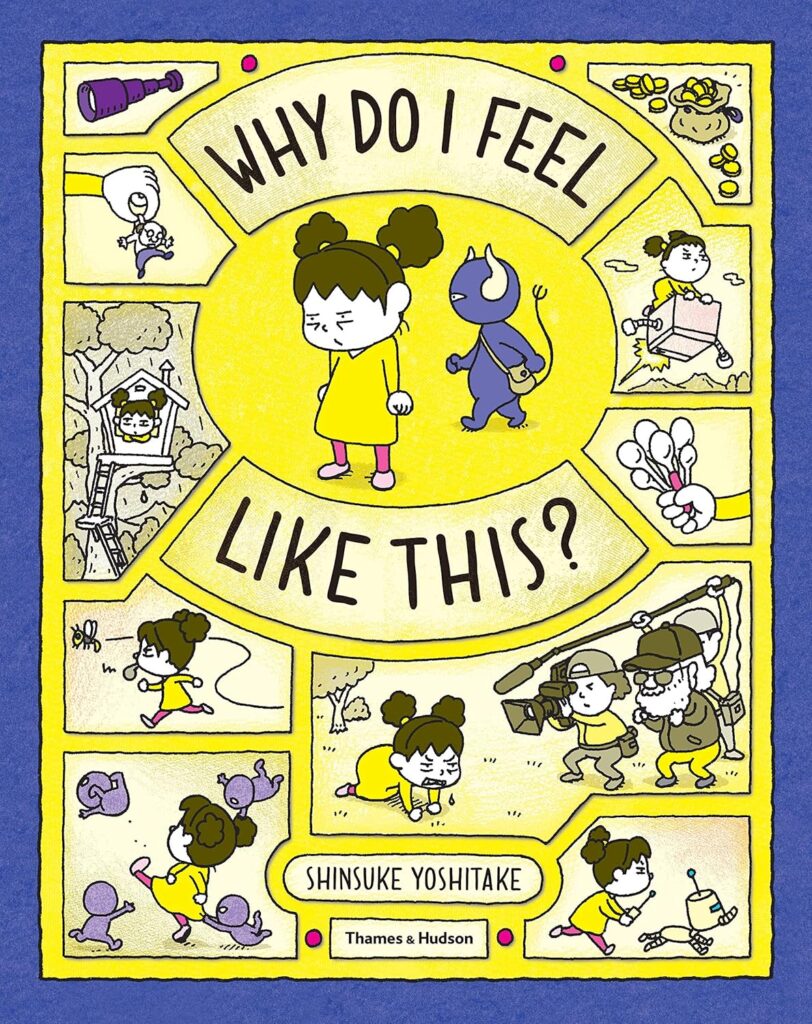
Why Do I Feel Like This? Shinsuke Yoshitake is a warm, witty, and wise picture book that’s as entertaining as it is enlightening.
Everyone knows the struggle of navigating big emotions — especially when they don’t quite have the words to explain how they’re feeling. Why Do I Feel Like This? is a brilliant, funny, and thoughtful exploration of just that.
Told through the eyes of a young girl on her way home in a thoroughly bad mood, the story dives straight into the unpredictable world of childhood feelings. As she trudges along, annoyed and unsure why, her imagination takes over. Could her bad mood be something she caught? Did it come from something she ate? What if she could store her feelings in jars and sort through them later — or even send them off in a rocket?
This clever mix of humour and introspection is where the book really shines. Rather than offering neat solutions or moral lessons, Shinsuke allows his young protagonist to explore every odd and silly idea that pops into her head. It’s a wonderfully relatable portrayal of how children (and adults!) can spiral through emotions without always knowing why.
The illustrations are bold, quirky, and full of character. Every page is packed with visual humour and fantastical scenes that bring the girl’s musings vividly to life. From an emotion menu to a whimsical contraption for filtering out bad moods, the book invites children to laugh while also considering their own emotional experiences.
Offering gentle encouragement for self-reflection, it opens the door for children to think critically and creatively about their emotions. It reassures them that it’s okay to feel angry or sad sometimes, and that those feelings aren’t permanent. By the end of the book, the girl hasn’t magically solved all her problems, but she has learned a little more about herself. In a world that often expects children to be cheerful and resilient without giving them the space to explore what they feel, Why Do I Feel Like This? is a refreshing and necessary read. It invites children to wonder, imagine, and, most importantly, to understand that emotions are just part of being human.
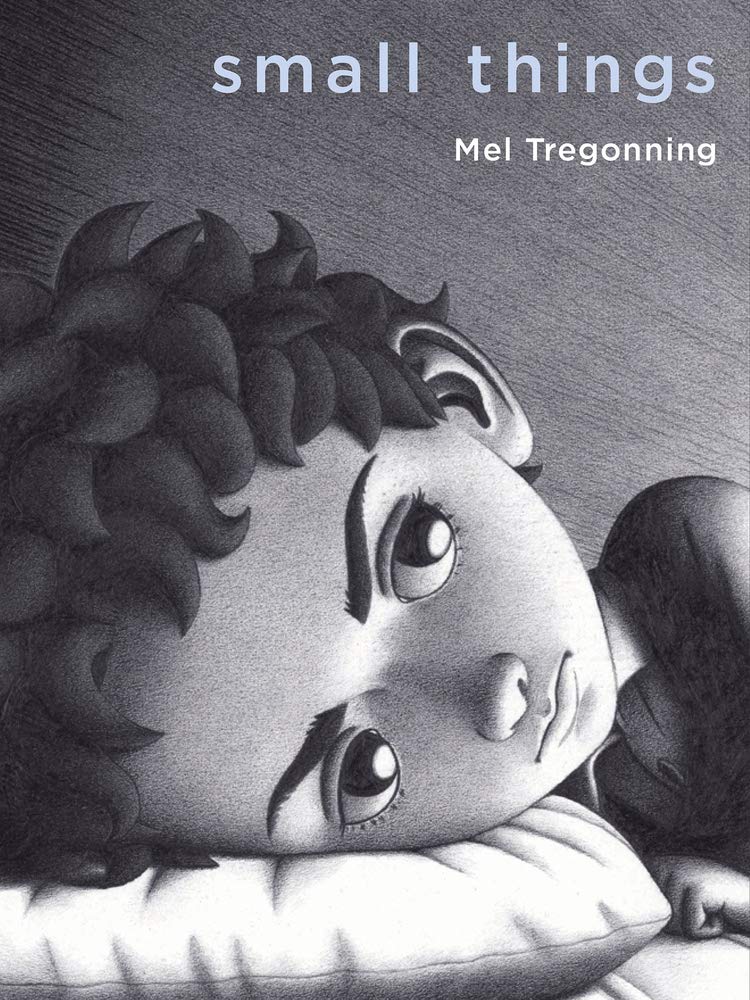
I’ve chosen a graphic novel for our older children, Small Things by Mel Tregonning, a hauntingly beautiful and deeply moving wordless graphic picture book that explores childhood anxiety with rare sensitivity and emotional depth that offers an honest portrayal of the internal struggles many children face, often in silence.
The story follows a young boy who appears to be slowly unravelling under the weight of his worries. He’s having trouble fitting in at school, his academic performance is slipping, and he finds himself becoming short-tempered, even towards the people who care about him. He feels completely alone. But what makes this book so affecting is that not a single word is used to tell his story. Instead, it is told through evocative, monochrome illustrations.
The boy’s anxiety is represented by shadowy, imp-like creatures that follow him everywhere. They cling to his back, crowd around his thoughts, and, most disturbingly, begin to nibble away at pieces of his body – a striking visual metaphor for how anxiety can feel like it’s eating away at one’s sense of self. It’s this imagery that captures the intense, often invisible toll mental health struggles can have on children, and it does so with startling clarity.
As the story progresses, the reader sees the boy slowly reach a breaking point — but then something shifts. Through a quiet act of kindness and connection, he begins to see that he’s not the only one surrounded by these worrying “creatures”. He notices that others, too, carry their own small demons, no matter how confident or put-together they may seem on the outside. This moment of realisation is gentle but transformative. It’s a reminder that we are never truly alone in our struggles, and that opening up can lead to healing.
Small Things offers a unique opportunity to start meaningful conversations about emotional wellbeing. It can be particularly valuable for children who find it difficult to express their feelings verbally. Reading this book together can open the door to discussing what anxiety feels like, how it might show up, and how we can support one another through it.
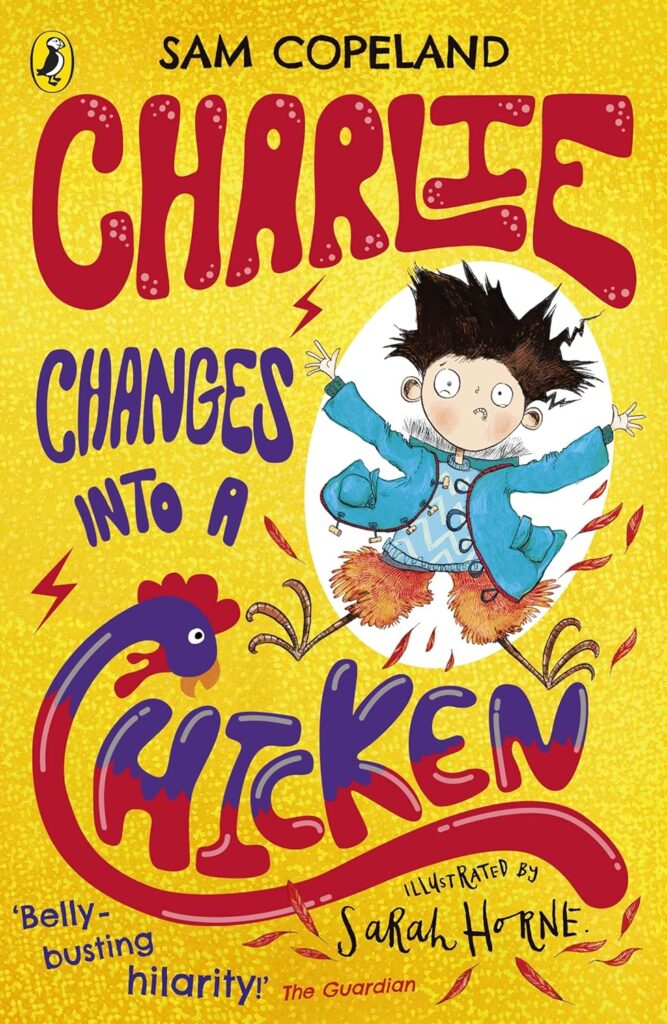
And finally, I’ve picked Charlie Changes Into A Chicken by Sam Copeland, a laugh-out-loud adventure with a surprising emotional core.
The story centres on Charlie McGuffin, a seemingly ordinary boy with a very extraordinary problem – he changes into animals when he gets anxious. One moment he’s himself, the next he’s a flea, a pigeon, or even a rhino. And the worst part? He has no control over it. His transformations happen at the most inconvenient times, like in the middle of a school play or when he’s trying to avoid the class bully.
While the story is absolutely hilarious (and children will delight in the unexpected animal moments), the book also explores serious issues with sensitivity. Charlie’s life is full of real worries; his older brother is seriously ill in hospital, and his parents are understandably stressed. Charlie tries to stay strong for everyone, bottling up his fears, which leads to the wild animal transformations. It’s a clever metaphor for how emotions can feel overwhelming when children don’t have the words or space to express them.
Despite the fantastical elements, the characters are grounded and relatable. Charlie is supported by a trio of loyal friends, the science-loving Flora, the practical Mohsen, and the hilariously blunt Wogan. Their friendship is a highlight of the book, demonstrating how empathy, humour, and teamwork can make all the difference in difficult times.
In addition to being fun and entertaining, Charlie Changes Into A Chicken subtly encourages children to talk about anxiety and feelings. It normalises the idea that it’s okay to worry, and more importantly, that it’s okay to ask for help. The book’s final message is one of hope, resilience, and the strength of both family and friendship.
Illustrated throughout with lively drawings by Sarah Horne, the book is visually appealing and accessible, even for reluctant readers. A wonderfully funny, thoughtful read that combines magical mayhem with emotional insight.
Tips For Wellness from our Mental Health In Schools Team
Stress Awareness
Stress is what you feel when you’re worried, nervous, or under pressure. It’s your body’s way of reacting to things that feel difficult, scary, or too much to handle. Everyone feels stressed sometimes! Stress can come from lots of things, such as:
School – too much homework, exams, or feeling like you have to do really well.
Friends – disagreements/ arguments, bullying, or feeling left out.
Family – disagreements/ arguments, moving house, or changes like a new baby in the family.
Big Changes – starting a new school, growing up, or losing someone you care about.
Some stress can be good, but too much can cause us to feel anxious or depressed, which might affect our sleeping, eating habits and general wellbeing. If stress is going on for a long time, we may also experience ‘burnout’, which is when our body is exhausted and has not had a chance to rest. There are things we can do to help our body recharge and reduce stress:
Our tips for managing stress:
Talk to someone you trust. This helps you not to feel alone, because someone is there to listen to you and to care. Remember – it’s okay to ask for help!
Stress bucket activity – follow the QR code/link to complete your own stress bucket. This may help you to see what is contributing to your stress, as well as what helps you to feel calmer.
Moving your body can help to release stress and make you feel good. Why not try dancing to your favourite song or going for a walk with friends or family?
Get creative – Art has been found to help people feel present in the moment and reduce the feeling of stress and worry. Follow the QR code/link for more information!
Create a calm corner – It is important to have somewhere that you feel safe, and you could go there when you feel like you need a break. You could fill the corner with soft things like pillows and blankets, and is the perfect place to read, draw, or even listen to calming music!